Guide9 min read
AI in M&A Deal Sourcing: Identifying Undervalued Targets in 2026
AI M&A deal sourcing in 2026: which public records to query, which signals matter, and where the tools still fail. A sober guide for ICs and LPs.
Published
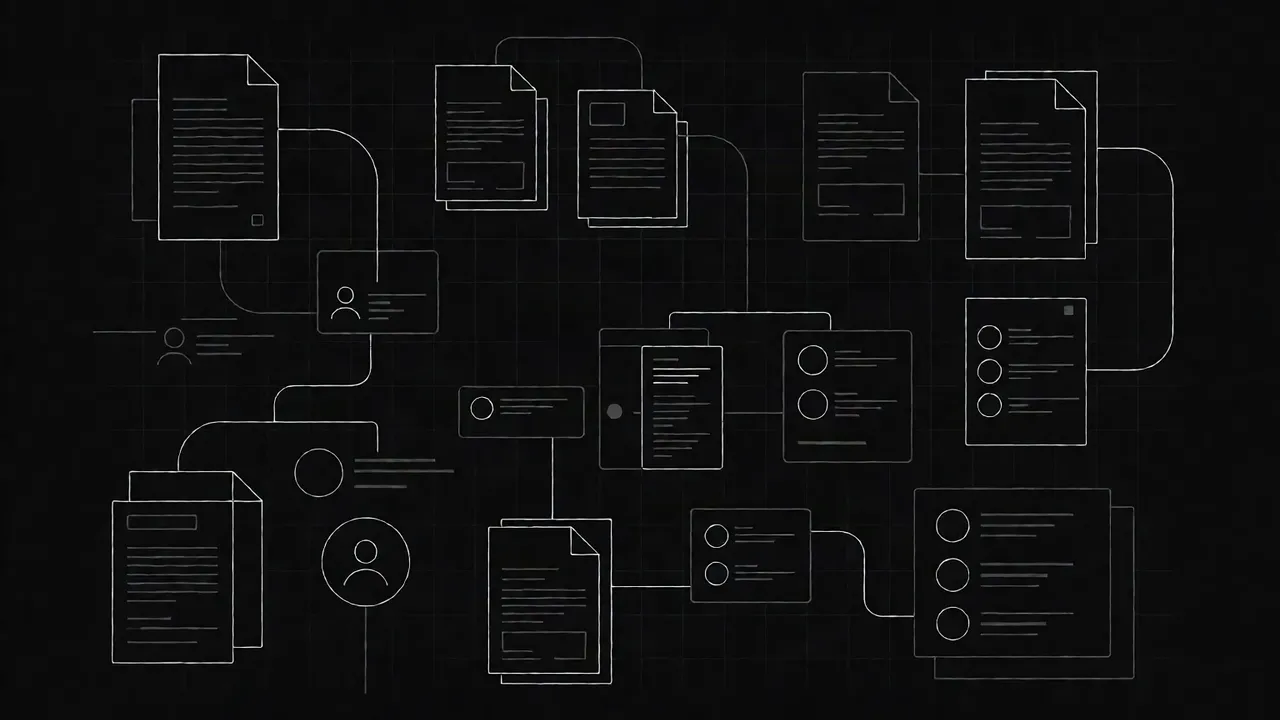
AI M&A deal sourcing is a records problem before it is a modelling problem. The tools that hold up in an IC in 2026 query SEC EDGAR, Companies House, OpenCorporates, CourtListener, sanctions lists and USPTO filings on a schedule, then rank targets by trigger events. The tools that fail rank by narrative.
Two of the three vendor links I was handed while writing this were dead when I checked them in October 2026. S&P Global Market Intelligence's page on AI in dealmaking returned a security-controls error, and Accenture's AI in M&A page returned a 404. That is the honest state of much vendor research on this topic — which is exactly why the durable edge sits in primary records, not in someone's thought-leadership PDF.
Key takeaways
- Deal sourcing AI earns its keep by monitoring primary registries continuously, not by generating target lists once a quarter.
- Trigger events — an 8-K, a director resignation, a charge registered at Companies House — are the signals that precede a process, and they are all public.
- "Undervalued" is a hypothesis your model produces, not a verdict. The IC still has to test it.
- No vendor publishes an auditable hit rate. Treat every accuracy figure as a backtest until you can reproduce it on your own historical pipeline.
- The tool is decision support. It does not replace the call, the site visit, or the judgement.
What is AI-powered deal sourcing, and how has it evolved?
AI-powered deal sourcing is the continuous, automated reading of public and licensed records to surface companies that match an acquisition thesis, ranked by the strength of a recent trigger event. It has moved through three phases: deal flow as a contact database, deal flow as scraped aggregator lists, and now deal flow as scheduled monitoring of primary sources with language models extracting the structure.
The first two phases failed for the same reason. They described companies. They did not tell you what changed this week. A CRM full of names is not a pipeline. A scraped list of 40,000 companies that match a NAICS code is not a pipeline either — it is a mailing list with extra steps. What changed is that the underlying records became machine-readable at scale, and extraction became cheap enough to run on every filing rather than on a shortlist.
Where this lands in practice: AI in corporate development is now mostly a monitoring function. The corp dev team owns the thesis; the tool watches the registries and pings when the thesis is touched.
How does AI target identification work across SEC EDGAR, Companies House and OpenCorporates?

AI for M&A target identification works by joining entity records across registries, then scoring each entity on recency and severity of trigger events. The registries are complementary, not interchangeable, and each has a hard limit you need to know before you build on it.
| Source | What it gives you | Freshness | Main limit |
|---|---|---|---|
| SEC EDGAR | 8-K material events, Schedule 13D/G stakes, proxies, S-1s, insider filings | Filings post on acceptance; full-text search reaches back to 2001 | US issuers only; private targets are largely invisible |
| Companies House | UK incorporations, accounts, director appointments and resignations, registered charges, persons with significant control | Usually within days of filing | UK only; small-company accounts are abridged |
| OpenCorporates | Cross-jurisdiction entity graph and corporate relationships | Varies by underlying registry | Coverage and update speed differ country to country |
| CourtListener | US federal dockets and opinions | As filed | Mostly federal; state litigation is patchy |
| Sanctions and PEP lists | OFAC, EU, UN designations | On publication | Name matching produces false positives you must clear manually |
| USPTO | Patent assignments, abandonments, examiner activity | On publication | US filings only; tells you about IP, not about solvency |
The join is the hard part. Legal names collide, subsidiaries mask parents, and a UK company with a US parent will appear in both systems under different identifiers. Budget real time for entity resolution. It is unglamorous and it is where most pipelines quietly break.
Machine learning deal origination vs. predictive analytics: what's the difference?
Machine learning deal origination finds candidates. Predictive analytics ranks them against outcomes you have already observed. You need both, and you need the second one trained on your own closed and passed deals — a model trained on someone else's deal history is a model of someone else's strategy.
What signals does AI actually prioritize in undervalued assets?
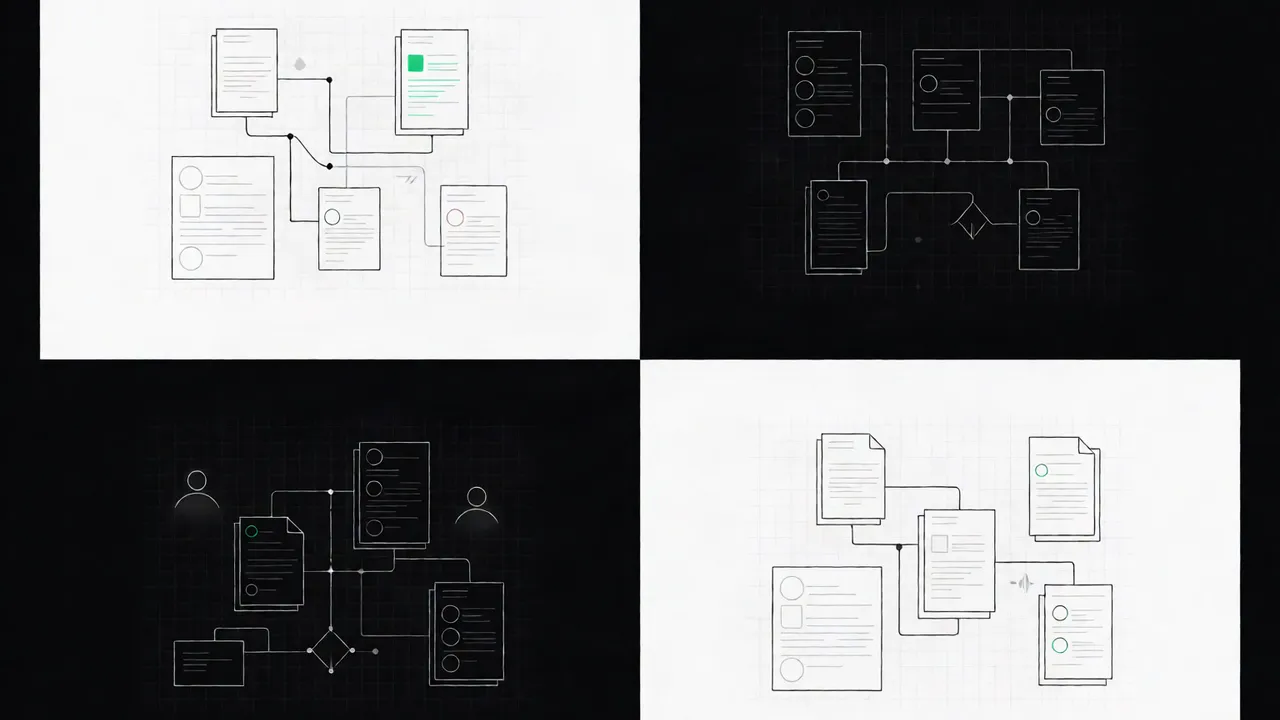
The signals that matter are the ones that are public, dated, and precede a process. In practice that means covenant stress, leadership churn, registered security interests, litigation, and IP abandonment. A model that ranks on these is auditable; a model that ranks on sentiment is not.
- Material event filings — impairments, going-concern language, sudden CEO or CFO departures.
- Activist or strategic stakes — a 13D tells you someone else has already done the work.
- Director churn — repeated resignations at Companies House often precede a sale process or a solvency event.
- Registered charges — a lender with a fixed charge is senior to you. This changes the price you can pay.
- Litigation dockets — contingent liabilities that never appear in a data-room summary.
- Patent assignment and lapse — tells you whether the IP is being defended or quietly dropped.
- Sanctions and adverse media — these are deal-breakers, not discounts. Screen early, not at signing.
For the last category, the workflow matters more than the tool; an investor's guide to AI-powered adverse media screening covers how to keep false positives from drowning the real ones.
What do verifiable outcomes from AI deal screening actually look like?
No vendor I have seen publishes a hit rate you can audit, and the honest position is that you should not trust one that does. What you can verify is coverage and latency: which registries the tool reads, how often, and how long after a filing you get the alert.
The first time I ran this on a live pipeline, the model surfaced a target that looked genuinely mispriced. It had missed a registered charge filed three weeks earlier, because the entity resolution had matched the trading name rather than the legal entity. The lesson was not that the tool was bad. It was that the tool was only as good as the identifier underneath it.
Illustrative pattern, not a case study: a screening pass flags a mid-market manufacturer — director resignations in two consecutive quarters, a new fixed charge, a patent allowed to lapse. None of that is a deal. All of it is a reason to make a call this week rather than next quarter.
How do you implement AI in your deal sourcing workflow?
Implement it as a monitoring layer on top of your existing thesis, not as a replacement for it. Seven steps, in order.
- Write the thesis down as falsifiable criteria. Sector, size band, geography, ownership structure. If you cannot write it, no model can score against it.
- Pick your registries and confirm the limits. EDGAR alone will not find private UK targets. Companies House alone will not show you a US parent.
- Fix entity resolution first. One canonical identifier per target, with aliases recorded. This is the step people skip.
- Define trigger events, not scores. "New fixed charge registered" is testable. "Attractiveness 8.2" is not.
- Set alert thresholds and route them. An alert nobody reads is a log file.
- Backtest on your own history. Run the criteria against deals you passed on three years ago and see what it would have surfaced. Label the output a backtest, because that is what it is.
- Keep a human in the loop for the first call. The model opens the door. It does not walk through it.
For the screening end of this, the mechanics overlap heavily with AI in VC due diligence for automating risk analysis and deal screening — the difference between origination and diligence is mostly timing.
What are the limits of AI in M&A, and what complements it?
AI in M&A is a screening and monitoring tool with three hard limits: it cannot see private information, it cannot price a deal, and it cannot tell you whether a management team is worth backing. Everything it does well sits upstream of those questions.
The limits are worth naming precisely, because they determine what you still have to pay humans for.
- Private companies file little. A UK small company files abridged accounts. A US LLC may file nothing useful at all.
- Registries lag reality. A charge registered this week may reflect a negotiation concluded last quarter.
- Name matching fails loudly. Sanctions and adverse media screening produce false positives; someone has to clear them.
- Every model reflects its training data. A model trained on completed deals will over-weight the characteristics of companies that got bought, which is not the same as companies that were undervalued.
- Nothing here is investment advice. These are screening outputs. The decision, and the liability, remain with the IC.
What complements it is the same thing that always did: management meetings, customer calls, and a read on the sector that comes from having operated in it. AI in private equity risk assessment is a reasonable model for how to blend the two without pretending the tool is doing more than it is. Where the target is stressed, the diligence bar rises further — AI in distressed asset due diligence is the relevant companion.
Where is deal sourcing technology heading in 2026 and beyond?
Deal sourcing technology in 2026 is consolidating around continuous monitoring and away from one-off list generation. The direction of travel is fewer dashboards, more alerts, and more pressure on vendors to show reproducible coverage rather than claimed accuracy.
Three things I would expect to hold:
- Primary records stay the moat. Anyone can license a news feed. Fewer teams do the entity resolution work properly.
- Auditability becomes the differentiator. Buyers will ask which registries are read, how often, and with what latency. Vendors who cannot answer will lose.
- Forecasts stay labelled as backtests. Any hit-rate figure is a backtest until it is reproduced forward on your own pipeline. Treat it that way in the IC memo.
If you want to see how coverage and alerting are handled in practice, MarketPrior is where we publish the specifics — which sources, which cadence, and what the tool will not do.
FAQ
Can AI really identify undervalued M&A targets?
It can identify targets that show public trigger events consistent with being under-priced. That is a hypothesis, not a valuation. The pricing work still requires financial diligence and a view on the sector.
What is the best public data source for AI-driven target identification?
There is no single best source. SEC EDGAR is strongest for US issuers, Companies House for UK entities, and OpenCorporates for cross-border relationships. Most useful pipelines join at least three.
How do I backtest an AI deal sourcing tool?
Run its criteria against deals you screened and passed on two to three years ago. Check what it would have surfaced, what it missed, and how many alerts you would have had to clear. Reproduce the result before you believe it.
Does AI deal sourcing replace brokers or bankers?
No. It replaces the manual reading of filings, which is the part humans are worst at. Brokers still control the processes that never touch a public record.
Is AI deal sourcing worth it for a small fund?
Only if you are running a repeatable thesis across a defined universe. If you do a handful of deals a year from personal networks, the entity resolution work will cost more than it returns.