Guide8 min read
AI in Real Estate Due Diligence: A 2026 Investor's Guide to Automated Risk Assessment
How AI real estate due diligence works in 2026: lease abstraction, risk triage, tool evaluation, citations, and the limits investors must accept.
Published
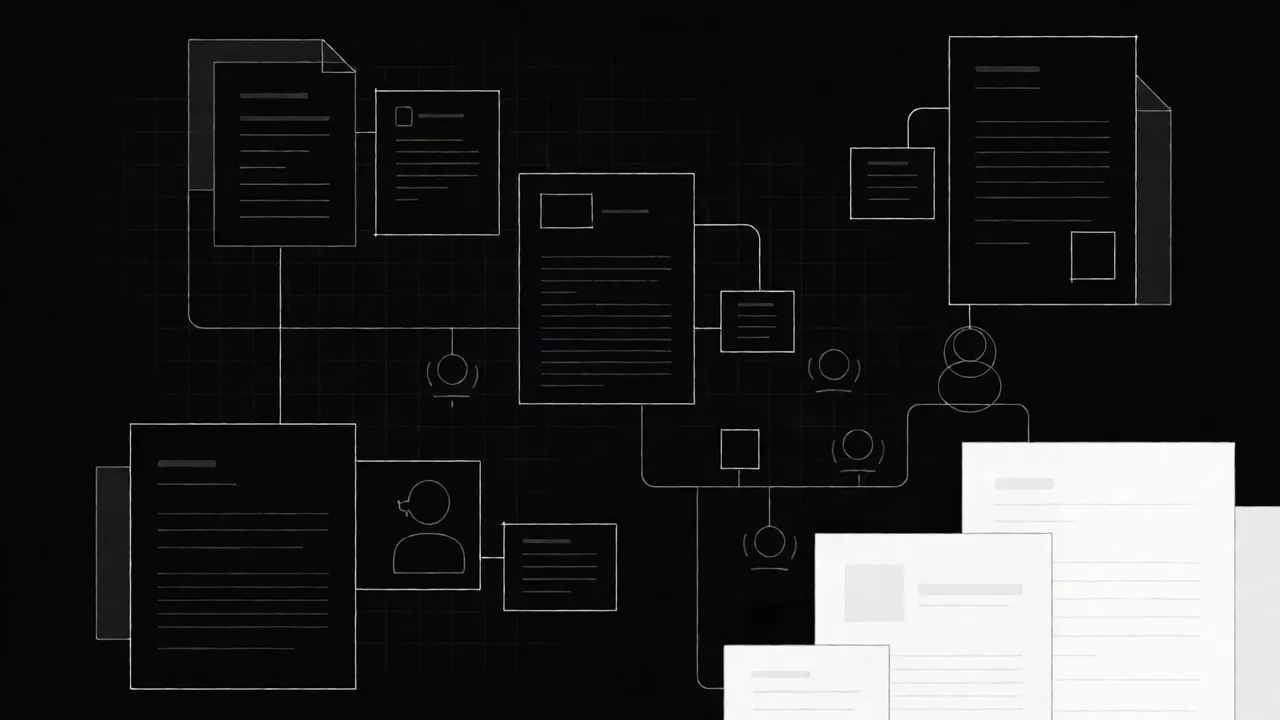
AI real estate due diligence is the use of document-intelligence and record-matching systems to extract lease and loan terms, verify property and counterparty data against public records, and triage risk before an IC meeting — with a human signing off on every material finding. It does not replace title, survey, or legal review. It compresses the search-and-summarise work that otherwise eats the first two weeks of a deal.
The 2026 tool market has already segmented. One vendor ships a dedicated AI lease abstraction agent plus a separate lease translation agent alongside its acquisition due diligence product, while a 2026 comparison of platforms lists five distinct modules including document intelligence, deal workflow, and an investment playbook. Segmentation is a sign of maturity — and of overlapping marketing claims you have to test yourself.
Key takeaways
- AI's reliable job in real estate diligence is extraction plus reconciliation, not judgement. It finds the clause; you decide what it means.
- The highest-value use case is lease abstraction, because lease terms drive rent roll, capex, and exit assumptions at once.
- Every extracted fact needs a citation back to the page it came from. No citation, no IC slide.
- Speed gains are real but bounded by the slowest counterparty, not the slowest reviewer.
- Treat any published accuracy or timeline figure as a backtest on someone else's portfolio, not a promise about yours.
What Is AI Real Estate Due Diligence, and How Does It Work?
AI real estate due diligence is a pipeline of four steps: ingest the documents, extract structured facts, reconcile those facts against independent records, and surface the exceptions. The output is a risk list with citations, not a verdict. The system reads a lease, pulls the rent schedule, escalations, options, and co-tenancy triggers, then checks the entity names and parcel data against registries.
SurfaceAI's 2026 insight describes real estate due diligence as "one of the most time-sensitive, high-risk phases" of a transaction — which is exactly why the extraction layer matters. Read SurfaceAI's analysis of the shift from manual review to automated intelligence.
The reconciliation step is the part most buyers skip. Extraction alone gives you a faster version of the same mistakes.
What Does Automated Property Due Diligence Actually Cover?

Automated property due diligence covers document-heavy workstreams with repeatable structure: leases, loan agreements, service contracts, estoppels, and title exceptions. It covers them well when the source is a text PDF and badly when it is a scanned 1987 amendment with handwritten margin notes.
| Workstream | What AI extracts | Record to reconcile against | Where it breaks |
|---|---|---|---|
| Lease abstraction | Rent, escalations, options, co-tenancy | Rent roll, estoppels | Handwritten amendments |
| Entity verification | Borrower, guarantor, SPV names | Companies House, OpenCorporates | Nominee structures |
| Counterparty screening | Names, aliases, addresses | Sanctions lists, CourtListener | Transliteration variants |
| Title and encumbrance | Easements, covenants, exceptions | County recorder filings | Unrecorded side letters |
| Physical risk flags | Address, build year, occupancy | Permits, USPTO for signage | Unpermitted work |
For adjacent asset classes the same pipeline applies with different documents. Distressed portfolios add loan-level complexity — see AI in distressed asset due diligence for hidden liabilities and recovery potential.
How Does AI Identify and Prioritize Real Estate Risks?
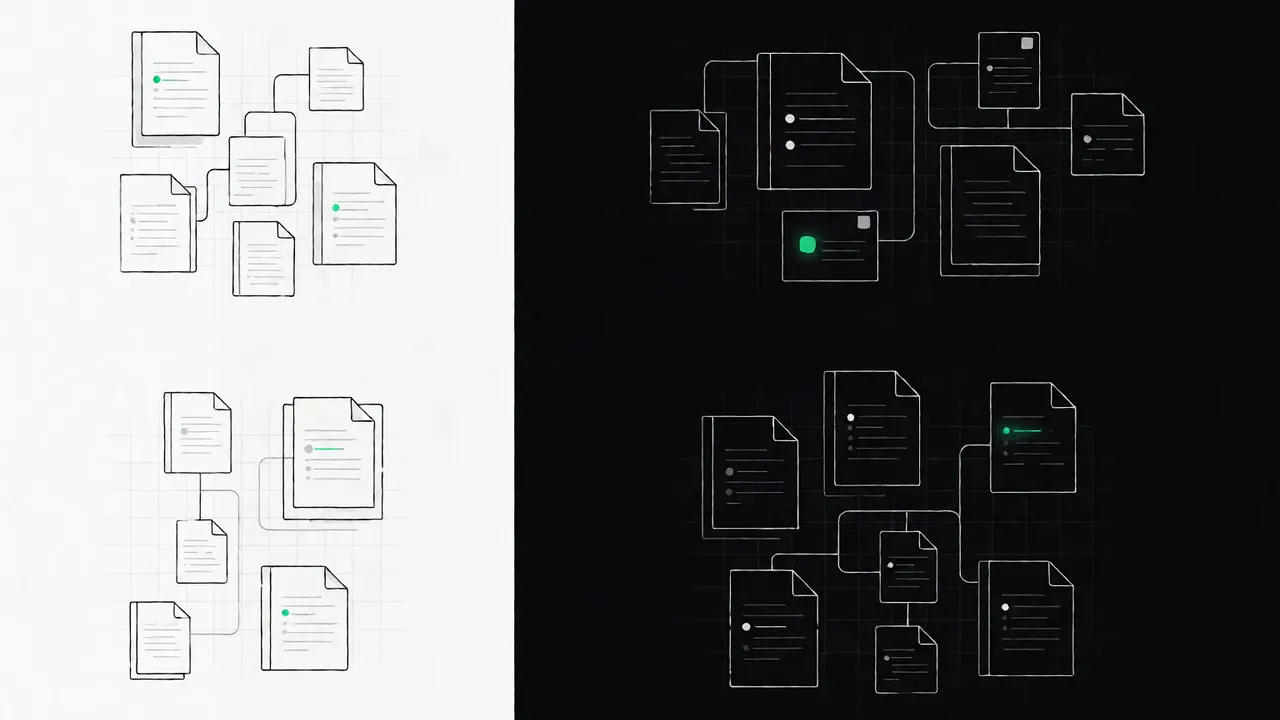
Real estate risk identification AI prioritizes by financial materiality and reversibility, not by how alarming a clause sounds. A co-tenancy trigger in an anchor-dependent retail asset outranks a cosmetic repair obligation. A ground lease with a 2031 expiry outranks almost everything.
The ranking rules I would use:
- Deal-breakers — anything that changes the asset's legal character: ground lease expiry, uninsurable title defects, zoning non-conformity.
- Cash-flow movers — escalations, percentage rent, TI obligations, unrecovered CAM.
- Exit constraints — transfer restrictions, ROFRs, lender consent requirements.
- Noise — cosmetic covenants with no economic consequence.
Most tools rank by confidence, which is a different axis. Confidence tells you how sure the model is about a clause. Materiality tells you whether the clause matters. Ask for both, and reject any output that gives you only the first.
Evaluating AI Due Diligence Tools for Real Estate: What Should You Look For?
Evaluate AI due diligence tools on citations, reconciliation, and exception handling before you look at accuracy claims. A platform that extracts a rent figure without a page reference is unusable in an IC memo, because no one can verify it under time pressure. Apers' 2026 comparison of AI platforms for real estate due diligence is a reasonable starting point for shortlisting, but test the shortlist on your own documents.
| Criterion | What good looks like | Red flag |
|---|---|---|
| Citation | Page and clause reference on every field | "Confidence: 94%" with no source |
| Reconciliation | Cross-checks against external registries | Documents only, no outside data |
| Exception report | Lists what it could not read | Silent gaps |
| Export | Structured output to your model | Screenshot-only results |
| Audit trail | Versioned, timestamped findings | Findings that change without a log |
Property data verification AI is the weakest link in most stacks. Extraction from your own documents is a solved-ish problem. Matching an entity name across Companies House, OpenCorporates, and a sanctions list is not, and it is where diligence failures actually originate.
Does AI Actually Shorten Real Estate Transaction Timelines?
AI shortens the review phase, not the transaction. Document review that took a week of associate time can compress to hours. But closing still waits on third-party reports, lender consent, and the slowest counterparty's counsel. Anyone selling you an end-to-end timeline reduction is selling you a backtest on a clean deal.
The honest gain is throughput per analyst: more deals screened to the same standard, with a written trail. That matters most at the top of the funnel, where screening volume determines which deals get real diligence at all — the same dynamic covered in AI in M&A deal sourcing for undervalued targets.
How Do You Integrate AI into Your Due Diligence Workflow?
Integrate AI at the extraction and reconciliation steps, keep humans on interpretation and sign-off, and log every override. Run one pilot deal in parallel with your existing process before you change anything.
A workable sequence:
- Define the fields that matter. Start with the twenty data points that drive your model. Not everything.
- Run the pilot in parallel. Same documents, both methods, compare outputs field by field.
- Measure the misses, not the hits. Count what the tool failed to find. That number decides whether you scale.
- Set an override log. Every human correction gets recorded. It becomes your training and your audit trail.
- Gate the IC memo. No extracted figure enters the memo without a citation.
- Re-run after any document update. A revised estoppel invalidates prior findings.
For funds where diligence and screening share a pipeline, AI in private equity risk assessment covers the portfolio-level version of this workflow.
What Are the Limitations of AI in Real Estate Due Diligence?
AI cannot value a property, assess a market, or take responsibility for a decision. It reads documents and matches records. It fails on handwriting, on unrecorded agreements, on ambiguous drafting, and on anything that requires knowing why a clause was negotiated.
Where human expertise remains critical:
- Interpretation — whether a co-tenancy clause is enforceable in practice.
- Market judgement — whether the submarket assumption behind the rent roll holds.
- Negotiation — what to push back on and what to price instead.
- Accountability — the signature on the IC memo.
There is also a governance limit. If your tool names upstream model vendors in its output, you may be exposing LP data to a supply chain you have not reviewed. Ask.
Case Studies: What AI Due Diligence Looks Like in Practice
I will not name deals. The patterns below are composites of how this work typically plays out, not accounts of specific transactions.
The retail anchor problem. A 40-tenant retail asset. Abstraction surfaces a co-tenancy clause tied to two named anchors. Reconciliation against the rent roll shows one anchor's sales reporting has lapsed for three quarters. The clause is now a live cash-flow risk rather than a footnote. No human read all forty leases in the time available.
The entity mismatch. A borrower SPV name differs from the guarantor by one word. Cross-checking against Companies House shows a dissolved predecessor with an unsatisfied charge. That finding does not come from reading the loan agreement.
The scanned amendment. A 1990s handwritten amendment changes a renewal option date. The tool flags it as unreadable and routes it to a human. That is the correct outcome — an exception report, not a guess.
What Is the Future of AI in Real Estate Investment?
The near-term direction is reconciliation depth: more external registries wired into the pipeline, and exception reports treated as the primary deliverable rather than a by-product. Forecasts about adoption rates should be read as backtests, not projections. The measurable shift is that diligence output is becoming structured data that feeds the model directly, instead of a PDF that someone retypes.
The constraint is not model capability. It is the availability and quality of the public records you can check against.
If you want to see how this maps to your own deal pipeline, MarketPrior is built for exactly this: cited findings, external record reconciliation, and an audit trail you can hand to an IC.
FAQ
What is AI real estate due diligence?
It is the use of document-intelligence systems to extract lease, loan, and contract terms, reconcile them against public records, and produce a cited risk list. It supports the decision. It does not make it.
Can AI replace lawyers in real estate due diligence?
No. AI handles extraction and reconciliation at volume. Legal interpretation, enforceability opinions, and sign-off stay with qualified counsel. The tool's job is to make sure counsel sees the right clause first.
How accurate is AI lease analysis?
Accuracy depends on document quality, not on the vendor. Text-based PDFs extract well; scanned or handwritten amendments do not. Test any tool on your worst documents, not its demo set.
What should I check before buying an AI due diligence tool?
Citations on every field, reconciliation against external registries, a real exception report, structured export, and a versioned audit trail. If a vendor will not run a pilot on your documents, that is your answer.
Is AI due diligence worth it for a single small property?
Usually not. The setup cost only pays back across a portfolio or a repeatable deal flow. For one asset, a careful manual review is cheaper and faster.